01
Start with bread and pastry
Street food includes bakery counters as well as carts. These names are useful starting points, not a promise that every seller carries them.
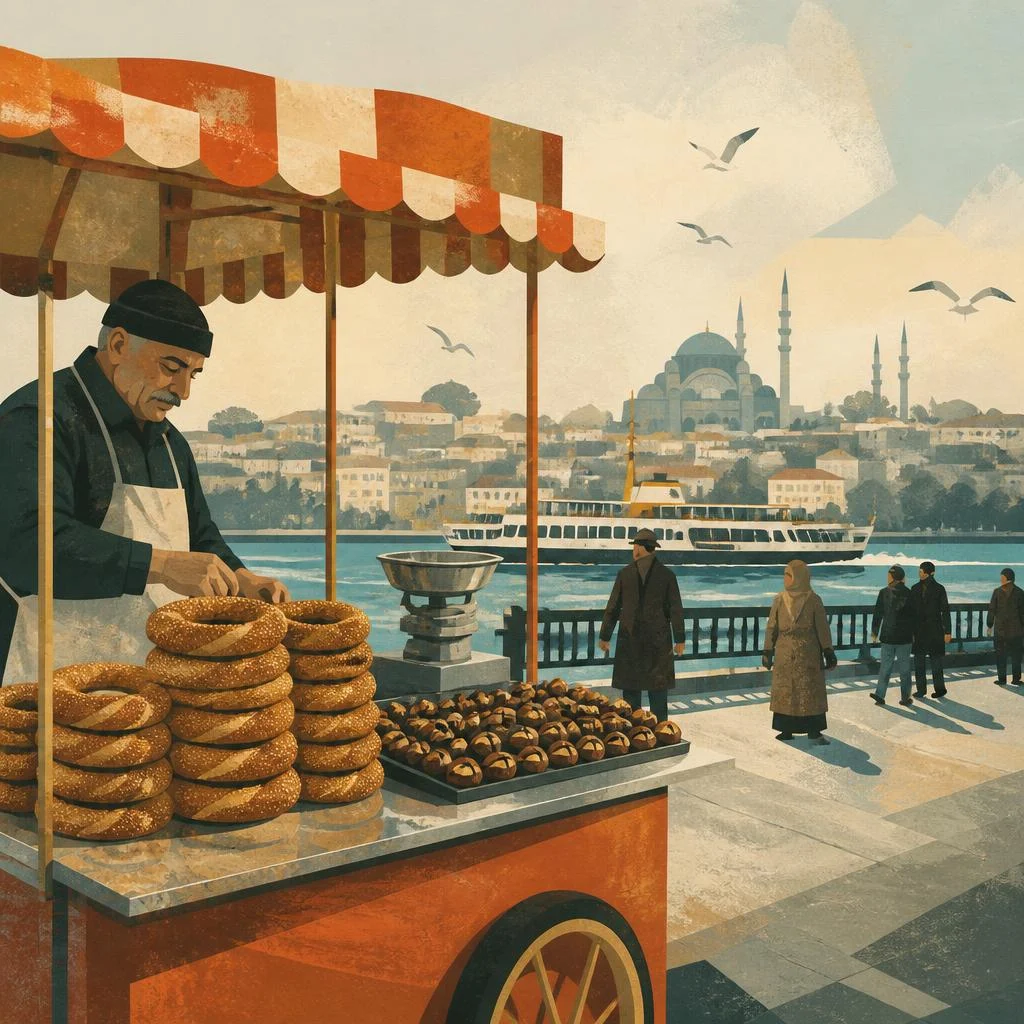
- Simit — a ring-shaped bread dipped in molasses and coated with sesame seeds. It makes a simple snack on its own; ask separately about any cheese or spread.
- Börek — thin pastry layers with fillings such as cheese, spinach, minced meat or potato. Ask which filling is inside rather than judging by the shape.
- Poğaça — a savory pastry sold plain (sade) or with fillings such as cheese (peynirli), minced meat (kıymalı) or olives (zeytinli).
Official information
02
Choose a sandwich, wrap or rice plate
For a more substantial stop, distinguish the dish from its serving style: dürüm means a wrap, not a particular filling. Ask what is being cooked and choose one meal before adding another stop.
- Balık ekmek — grilled fish in bread, associated with Istanbul’s waterfront areas such as Eminönü and Karaköy. Ask which fish is used and take care with bones.
- Döner dürüm — thin slices of meat cooked on a vertical rotisserie, wrapped in flatbread. Confirm the meat and the accompaniments before ordering.
- Tavuklu pilav — rice pilaf topped with shredded cooked chicken; some versions include chickpeas. It is a plate of food rather than a bread-based snack.
Official information
03
Notice regional roots and ingredients
Çiğ köfte has roots in southeastern cities including Adıyaman and Şanlıurfa. Contemporary street versions commonly use fine bulgur and spices, served with greens in lettuce leaves or lavaş flatbread. Traditional versions included raw meat, so confirm the preparation rather than assuming every version is meat-free.
Simit varies too: Ankara’s version is described as smaller and crispier than those in other parts of Türkiye. Regional clues are a reason to compare, not to expect one standard recipe nationwide.
- Midye dolma — mussels filled with spiced rice, usually eaten with a squeeze of lemon. They contain shellfish; ask how they have been stored before deciding to order.
- Kokoreç — roasted offal wrapped in sheep or goat intestines, chopped, seasoned and served in bread. It is not an ordinary meat sandwich.
- Kestane kebap — roasted chestnuts, especially associated with autumn and winter street carts. Ask for a small portion if you want a lighter stop.
04
Order a little and keep the walk flexible
For a bakery stop, try one simit or ask for a portion of peynirli börek if cheese suits you. For lunch, choose a balık ekmek or a döner dürüm rather than treating every item as a small snack. At a çiğ köfte counter, ask whether the filling is meat-free and how spicy it is before choosing a wrap.
Wheat, sesame, dairy, fish and shellfish occur in these examples. Ask clearly about allergies, sauces and shared preparation surfaces; a busy counter alone does not establish safe handling. Choose a few nearby stops and leave room to change the plan.
Opening hours, transit details and local conditions can change; check current information close to your visit.