01
A table built for sharing
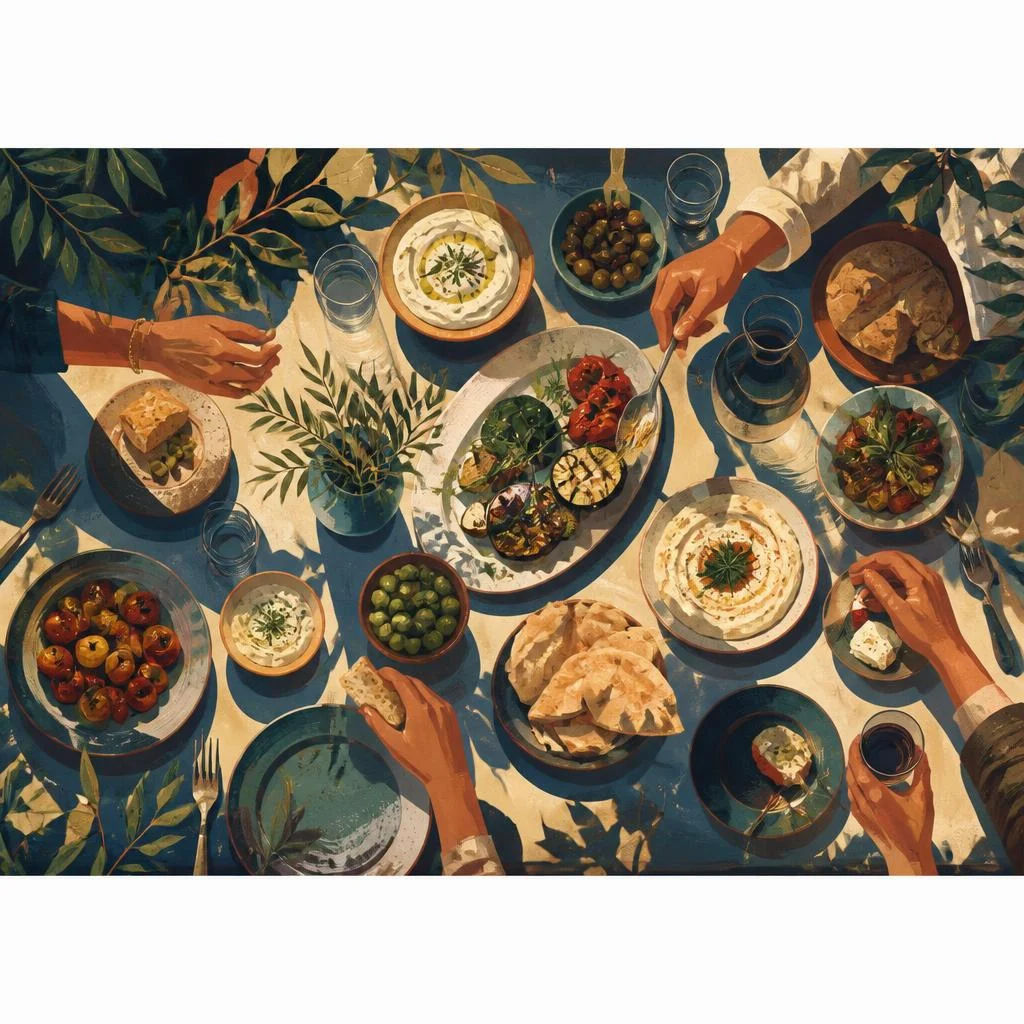
Meze refers to small dishes, often placed in the middle of the table before main courses. In a meyhane, or Turkish tavern, they can be part of a long shared evening. Start with a few dishes rather than assuming the whole display is a fixed set.
The names below help you recognize a menu; ingredients, serving sizes and the day’s selection still depend on the kitchen.
Official information
02
Recognize yogurt-based meze
These dishes share a yogurt base but differ in texture, vegetables and heat. They contain dairy; ask about the recipe if garlic, butter or any other ingredient matters to you.
- Haydari — thick yogurt seasoned with garlic and herbs such as mint and dill. It is a dip-like plate to eat with bread.
- Cacık — yogurt with cucumber, garlic and mint. It may be thick or diluted to a chilled, soup-like consistency, so ask how the kitchen serves it.
- Atom — creamy yogurt topped with red chili peppers seared in butter. Ask about the heat before choosing it as your yogurt plate.
- Yoğurtlu semizotu — purslane mixed with thick yogurt and garlic, combining leafy greens with a creamy dressing.
Official information
03
Add vegetables and regional contrasts
The Aegean tradition gives a useful starting point for vegetable and olive-oil plates. Fava is a broad bean purée; şakşuka combines fried eggplant with tomato sauce; zeytinyağlı enginar means artichokes cooked in olive oil. These offer different textures alongside a yogurt dish, though you should confirm the kitchen’s ingredients.
Mediterranean appetizer traditions also include humus, a chickpea purée with tahini, and babagannuş, roasted eggplant with peppers and tomatoes. These are regional associations, not exclusive boundaries: menus elsewhere may serve them too.
Official information
04
Build a small sample order
If they are available, a starting selection for two could be haydari, fava and şakşuka with bread: one creamy yogurt dish, one bean purée and one tomato-based vegetable plate. Ask whether those portions suit two people and whether a main course is still needed; this is an example, not a standard package.
If you prefer heat, ask about atom instead of haydari. For a dairy-free selection, ask whether the fava and vegetable dishes contain butter or yogurt rather than assuming their names guarantee it. Humus contains sesame through tahini; bread commonly contains wheat. Explain allergies and ask about shared preparation as well.
Check what is seasonal or prepared that day, then add another dish only if the table wants it. Choose a place near the rest of your evening and allow dinner to take its time.
Opening hours, transit details and local conditions can change; check current information close to your visit.